Denim Fabric Types: What Buyers Should Know Before Choosing
Two pairs of jeans can look almost identical in a photograph and behave completely differently after three washes. The difference is usually not the design but the denim fabric type: how it is woven, how heavy it is, whether it stretches, and how it was dyed.
This guide covers the fabric decisions that buyers are actually asked to make, and the ones that are hardest to change once production starts.
Why Fabric Decides More Than Colour
Colour is the visible part, but it is also the easiest to change. Fabric is the opposite: it sets the fit, the wash result, the cost and the hand feel, and once a bulk order is cut, none of it can be adjusted.
A fabric chosen only from a photograph will usually disappoint. Weight, stretch and surface texture do not survive a screen, which is why most experienced buyers work from a physical swatch and a specification rather than an image.
The Weave: What Twill Actually Means
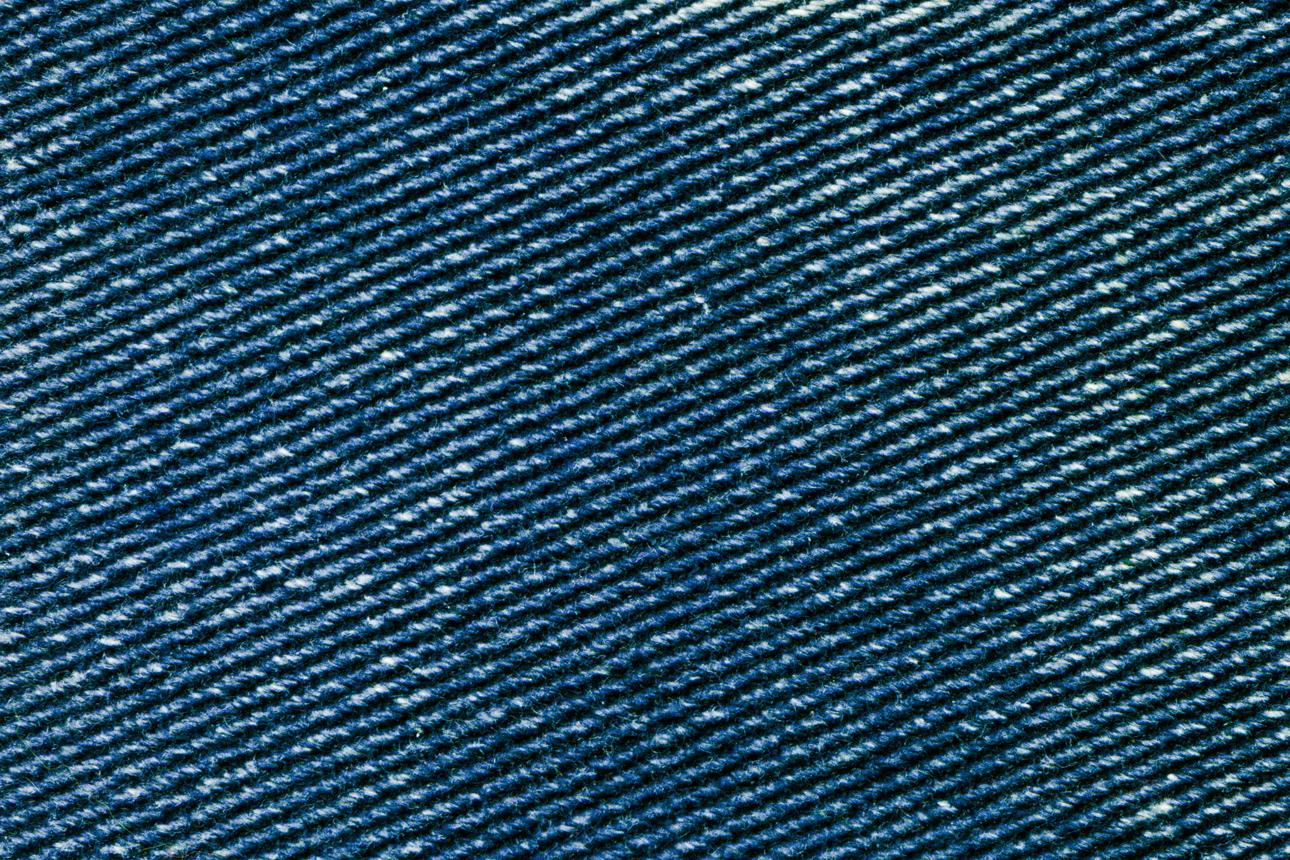
Denim is a twill, which means the yarns cross in a diagonal pattern rather than a simple over-and-under grid. That diagonal is what gives denim its surface and its strength.
The direction of that diagonal is not cosmetic. Right-hand twill runs upward to the left and is the most common construction. Left-hand twill runs the other way and tends to produce a softer hand and a different fading pattern. Broken twill alternates direction to reduce the leg twist that appears after washing — a detail that matters on wide-leg or loose styles.
Herringbone and other dobby constructions change the surface further. They are usually chosen for visual effect rather than performance, and they cost more because they run slower on the loom.
Weight: Ounces, GSM and What Each Range Is For
Fabric weight is expressed in ounces per square yard (oz) in the denim trade, and in grams per square metre (GSM) in most technical documentation. Buyers frequently receive one figure and are asked to approve the other, so the conversion is worth knowing: 1 oz ≈ 33.9 GSM.
| Weight (oz) | Approx. GSM | Typical use |
|---|---|---|
| 4–6 oz | 135–205 | Shirts, lightweight tops, dresses |
| 7–9 oz | 235–305 | Lightweight jeans, skirts, jumpsuits |
| 10–12 oz | 340–405 | Standard jeans, most jackets |
| 13–15 oz | 440–510 | Heavier jeans, workwear |
| 16 oz and above | 540+ | Raw and heavyweight denim, structured jackets |
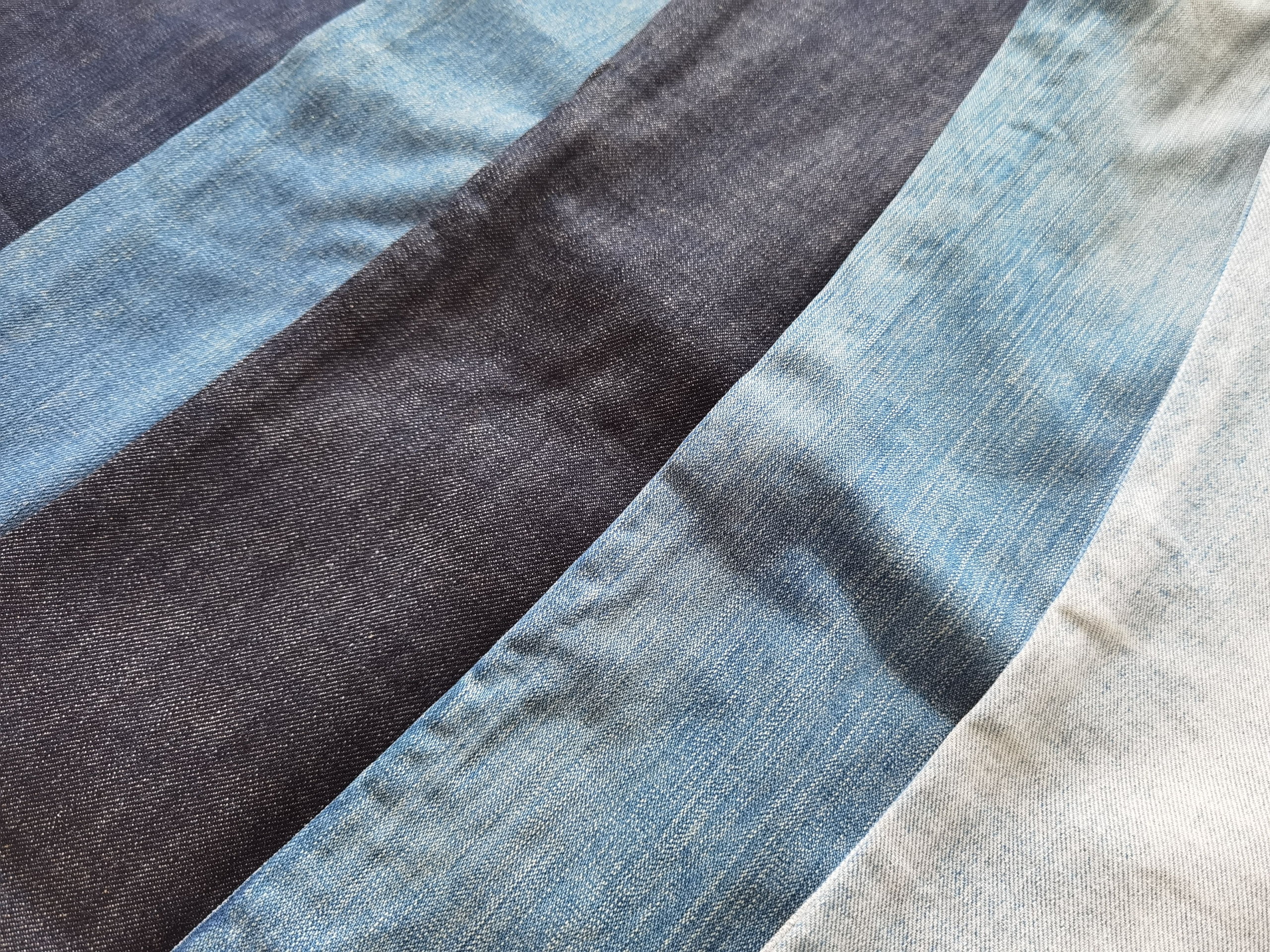
The ranges overlap because mills finish fabric differently. A 12 oz denim from one mill can feel heavier than 13 oz from another, which is why weight should always be checked against a physical sample rather than a number alone.
Weight also changes behaviour. Heavier denim holds shape and creases sharply, which suits a structured fit but can feel unforgiving. Lighter denim drapes more and is easier to wear, but shows construction problems more readily and can lose shape at stress points.
Stretch: Rigid, Comfort Stretch and Power Stretch
Rigid denim contains no elastane. It moulds to the wearer over time, which is its appeal, and it is the most predictable fabric to produce.
Comfort stretch usually carries a small percentage of elastane — often around one to two percent — which allows movement without changing the look. Power stretch uses more, and recovers more strongly, but changes the way the fabric fades and how the garment ages.
Stretch percentage has a direct effect on pattern making. A stretch fabric needs different ease through the seat and thigh than a rigid one, so switching fabric after the pattern is developed usually means re-cutting the pattern rather than adjusting the measurement chart. This is one of the most common causes of a second sample round.
Selvedge and Wide Loom
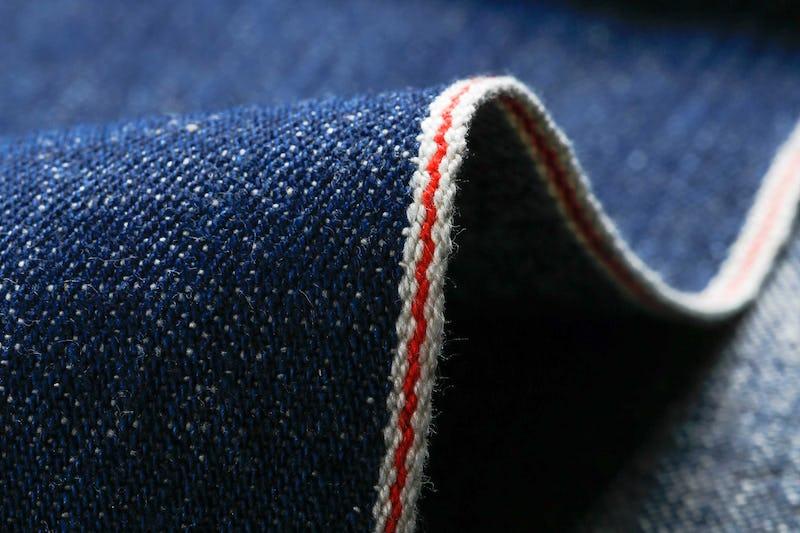
Selvedge denim is woven on shuttle looms that produce a narrow roll, typically around 30 to 32 inches wide, with a finished edge. The narrower roll means less fabric per metre of weaving and a higher cost, and it limits how the pattern can be laid out.
Wide-loom denim is produced at roughly double that width, which is faster and cheaper, and is what almost all commercial denim uses.
The choice is usually about positioning rather than performance. Selvedge supports a premium story and a visible outseam, but it constrains pattern efficiency and narrows the styles that can be cut economically.
Composition: What the Fibre Blend Changes
All-cotton denim is the reference point. It is durable, takes indigo well, and fades in a characteristic way.
Adding polyester increases strength and reduces shrinkage, and is common in workwear and lower-cost programmes. It also changes the fade: polyester holds dye more stubbornly, so the contrast that buyers expect from denim becomes less pronounced.
Viscose, lyocell and other cellulosic fibres soften the hand and improve drape, which suits relaxed and wide-leg styles. They also make the fabric more sensitive to washing and more likely to lose shape without careful finishing.
Whatever the blend, the specification should state percentages, not descriptions. “Cotton-rich” is not a specification.
Finish and Shade: Raw, Rinse and Washed
Denim arrives from the mill in one of several states, and the state affects both the appearance and how the garment behaves in production.
Raw, or dry, denim has not been washed after weaving. It is stiff, it shrinks, and it fades according to how it is worn. Rinse denim has had a light wash to remove shrinkage and soften the surface, and is the most stable starting point for a garment that will be further washed.
Anything beyond a rinse — stone, enzyme, bleach, distressed effects — moves the fabric into the garment-washing stage, where results depend on the recipe, the machine and the operator as much as on the fabric itself.
How to Specify Fabric Before Sampling
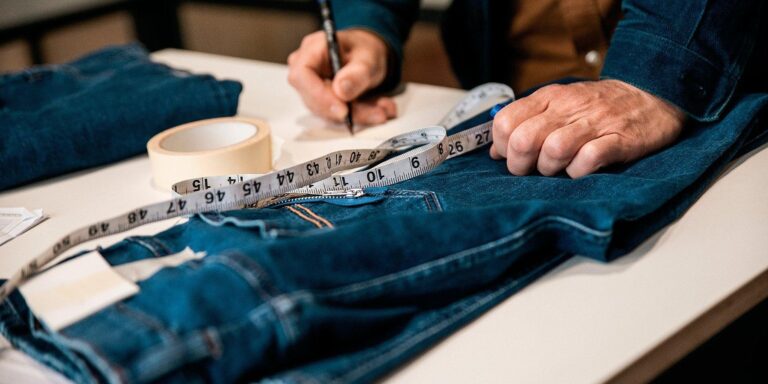
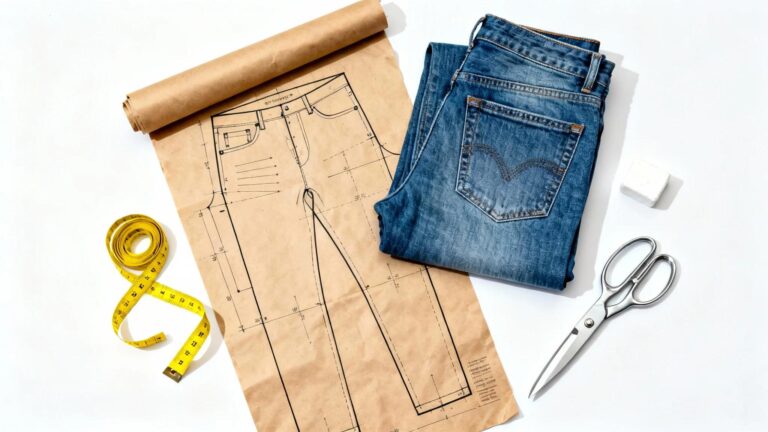
A fabric specification that can be quoted and sampled needs five things: the construction, the weight with a tolerance, the composition in percentages, the stretch behaviour, and the shade or finish reference.
A photograph can support that specification but cannot replace it. Neither can a weight alone — two 12 oz fabrics with different constructions can differ in hand, drape and how they take a wash.
If the fabric has its own minimum order quantity, that constraint belongs in the same conversation, because a fabric that requires several thousand metres changes what is possible on a small order — which is also why MOQ is not one number.
Once the fabric is settled, the next document is the tech pack that carries the specification into sampling, and then into the cost calculation.
What to Ask Before Committing to a Fabric
- Is this the production fabric, or a substitute for sampling?
- What is the construction, and what is the weight in both oz and GSM?
- What are the exact fibre percentages, including elastane?
- What shrinkage should be expected after the intended wash?
- What is the fabric’s own minimum order, and what is the lead time?
- Can a piece of the actual production lot be kept as a reference?
Keeping a reference piece matters more than it sounds. When bulk arrives, a physical standard settles questions that photographs cannot.
Discuss Your Denim Fabric With BlueForm Apparel
BlueForm Apparel works with brands on denim development in Dongguan, and fabric selection is usually where a project either becomes straightforward or becomes expensive. We work with the fabric available for the order rather than from a catalogue, and review weight, stretch and wash behaviour against the style being developed.
If you are choosing fabric for a first collection and are unsure which construction or weight suits the fit you have in mind, send the reference images or the spec you are working from. We will tell you what is missing before the sample is cut.
Contact BlueForm Apparel with your fabric questions, target weight and expected quantity.
Your Next Denim Project
Let's Discuss Your Denim Requirements
Share your styles, quantities, fabric, wash and branding requirements with BlueForm Apparel. Discuss wholesale, OEM, ODM and private label options for your project.
Discuss Your Project